

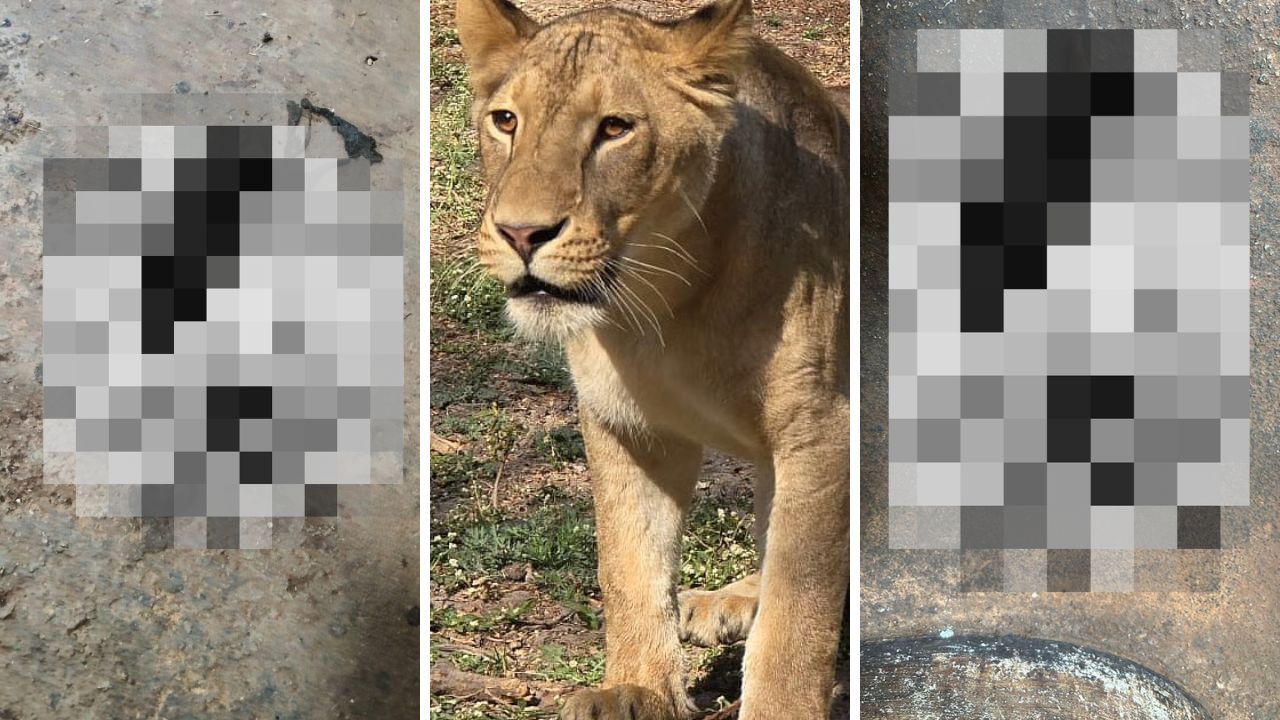
Malenadu Today News / Shivamogga / September 16 should have been a significant day for the Tyavarekoppa Tiger and Lion Safari in Shivamogga. Sara, a five-year-old Asiatic lioness brought to the safari along with the male lion Shiva from Indore in Madhya Pradesh under an animal exchange programme, gave birth to four cubs in a single litter. For a zoological facility housing Asiatic lions, a Schedule I species, the birth of four cubs was an important development from the point of view of captive breeding and conservation. But the celebration was short-lived. All four cubs died, and the circumstances surrounding their deaths have now triggered a series of questions over pregnancy detection, veterinary preparedness, neonatal monitoring, hand-rearing, maternity facilities, CCTV surveillance, post-mortem documentation and transparency in reporting the deaths.
Pregnancy Detection Failure & Initial Zoo Explanations
The zoo administration has maintained that this was Sara’s first pregnancy, that she did not know how to properly care for or clean the cubs, that she was not nursing them and that the newborns were weak. Officials have also stated that veterinarians were not certain before delivery that Sara was pregnant. According to their explanation, the lioness had mated again during the gestation period and, because expected physical changes associated with pregnancy were apparently not visible, the condition was suspected to be a pseudopregnancy. The authorities have further indicated that the mother was given the first 24 hours to care for the cubs naturally. However, when these explanations are placed together, they raise a more serious question: if the pregnancy was not detected, the birth was not anticipated, the mother was not nursing, the cubs were weak and maternal care was inadequate, at what stage did the safari’s veterinary and administrative system recognise that the litter was in danger?
The Critical 24-Hour Timeline Uncertainty
According to the zoo’s version, Sara gave birth to the four cubs on September 16 and all four died within 24 hours. That timeline, however, has itself become a matter of concern. Information circulating within the safari suggests that the cubs may have survived for longer than 24 hours, though no clear public record has so far settled the matter. The exact birth time of each cub, the exact time each cub died, and the sequence in which the deaths occurred have not been publicly clarified. If the official claim that all four died within 24 hours is accurate, keeper logs, veterinary observation records, post-mortem timings and CCTV footage should be capable of establishing that timeline beyond doubt.
Record-Keeping & Inventory Accountability
The explanation that newborn animals are not immediately entered into the formal inventory has also raised further questions. Inventory accounting is one matter, but birth records, health observations, treatment notes and mortality documentation are another. In a case involving a Schedule I species, such records assume particular importance. The key question is therefore not merely whether the cubs were entered in the inventory, but whether their births, health condition, maternal interaction, veterinary monitoring, deaths and subsequent post-mortem examinations were formally recorded from the beginning.
First-Time Motherhood Risk vs. Preparedness
The zoo director’s explanation that this was Sara’s first pregnancy has also been questioned by wildlife experts. According to the director, first-time mothers may not know how to care for their cubs, clean them or nurse them properly, and maternal behaviour may improve during the second or third pregnancy. The difficulty with that explanation is that if first-time motherhood is itself a recognised risk factor, it should arguably have triggered greater preparedness rather than serve only as an explanation after the deaths. A wildlife expert contacted by Malenadu Today has specifically asked why, once it was known that Sara was not nursing, no decisive intervention was made before the fourth cub died.
Institutional Precedents of Intervention in Other Zoos
There are zoo-related examples where first-time maternal neglect has prompted veterinary intervention. The material reviewed for this investigation refers to a case at Nandankanan where a first-time lioness failed to show adequate maternal care and the zoo veterinary team shifted towards hand-rearing. It also refers to Bannerghatta Biological Park, where in 2018, after a lioness reportedly ate one cub, the surviving cubs were shifted to the zoo hospital the next day and hand-reared. A Mysuru Zoo case from 2012 is also cited, in which an Asiatic lioness failed to nurse a cub and, after expert consultation, the cub was separated and hand-rearing was initiated. These examples do not prove that hand-rearing would necessarily have saved all four Tyavarekoppa cubs, but they do show that maternal failure can trigger intervention rather than being treated as an unavoidable end point.
Neonatal Risk & The Non-Nursing Window
The most critical admission remains that Sara was not nursing the cubs. That places the case squarely within the realm of neonatal risk. Newborn lion cubs depend on the mother’s milk, and whether they are able to latch and suckle is one of the earliest indicators that must be monitored. The unanswered issue is when safari staff first realised that Sara was not feeding them. Was it within one hour of the first birth? After five hours? Ten hours? Twelve hours? Or only when the cubs had already become weak? Equally important is what happened after the first cub began to deteriorate or died. Was the condition of the remaining cubs reassessed? Was assisted nursing attempted? Was emergency feeding considered? Was hand-rearing discussed? The keeper log and veterinary monitoring records should contain these answers.
Legitimacy of Emergency Hand-Rearing
Hand-rearing, of course, is not the first choice for healthy lion cubs. Maternal colostrum and natural care are crucial, and unnecessary human interference can itself create stress and interfere with maternal bonding. But the situation changes when the mother is not nursing, ignores the cubs, shows restlessness or aggression, or when the cubs begin to weaken. Under such circumstances, emergency intervention becomes a legitimate veterinary option.
The Jodhpur Comparative Case
A published study from Machia Biological Park in Jodhpur is especially relevant. In that case, an Asiatic lioness gave birth to three cubs but showed little attention towards them and moved away to another part of the enclosure. After one cub died due to mishandling by the mother, zoo keepers and park authorities removed the remaining cubs and decided to hand-rear them. The similarities are striking. In the Jodhpur case, the lioness showed no affection towards the neonates, was walking vigorously within the enclosure, and her udder was found to be empty. Because the remaining cubs were considered at risk of dehydration, they were removed from the maternal cage and shifted to an incubator baby-care unit. In Tyavarekoppa, the authorities themselves have said that Sara was not nursing. They have also referred to pacing and to the possibility of physical trauma to the cubs. The key question is therefore when the Tyavarekoppa team carried out a comparable danger assessment, and what decision followed from it.
Observation vs. Inaction During the First 24 Hours
The first 24 hours have become central to the controversy. If officials took the view that the mother should not be disturbed during this period, that cannot mean that nothing was to be done. A 24-hour period of maternal observation is not a 24-hour period of inaction. The Central Zoo Authority’s hand-rearing material includes an example from Kanpur Zoological Park where a mother had not nursed a cub even after 24 hours. The cub was then rescued and hand-reared. Because colostrum had not been obtained, alternative measures were used to support immunity before kitten milk replacer feeding was started. The significance of the example is not that every cub must be removed after exactly 24 hours, but that those 24 hours require active monitoring of nursing, suckling, aggression, injury, body temperature and dehydration. The question for Shivamogga is what exactly that monitoring consisted of.
Additional Timelines of Intervention from North Bengal and Nandankanan
The material gathered for this investigation also refers to other Indian cases where intervention happened earlier. At North Bengal Wild Animals Park, CCTV reportedly showed an Asiatic lioness refusing to nurse three cubs. After repeated suckling attempts failed for around 10 hours and the mother showed irritation and aggression, hand-rearing was considered necessary. In another case cited from Nandankanan Zoological Park, a cub that had not been nursed for about 11 hours was treated as requiring immediate intervention and was shifted for bottle feeding and round-the-clock monitoring. Again, these examples do not establish a universal 10-hour or 11-hour rule, but they show that intervention depends on the actual condition of the mother and cubs rather than on a fixed waiting period.
Reconstructing the Critical Hours
If all four Tyavarekoppa cubs really died within 24 hours, that period needs to be reconstructed in detail. Which cub lived the longest? Which cub attempted to suckle? Did any cub successfully feed? Did Sara groom any of them? When did the first cub begin to weaken? At what point did the first death occur? What was the condition of the other three at that time? Was intervention discussed after the first death? Was any cub examined separately? Was milk replacer ready? Was an incubator or warmer available? Were supportive measures attempted? These are not abstract questions. They concern what happened during the only period in which the cubs might still have been saved.
Physical Trauma Suspicion & Decision Timing
The post-mortem explanation raises another set of issues. According to an earlier explanation from the director, the mother may have dropped the cubs or stepped on them while pacing, causing internal haemorrhage. Lack of adequate milk was also said to have contributed to systemic complications. If that is correct, then the timing of the mother’s pacing becomes crucial. When was it first noticed? Was physical trauma suspected while the cubs were still alive? Was any cub seen being stepped on? Was such behaviour recorded on CCTV? If one cub had already suffered trauma, why were the others allowed to remain in the same enclosure? Who took that decision—the veterinary officer, zoo director, DFO or keeper?
Failure in Antenatal Diagnostic Protocols
The director’s statement that veterinarians did not know Sara was pregnant is perhaps the most serious aspect of the case. According to the explanation, after the first mating a roughly three-month gestation period was considered, but Sara mated again during the pregnancy period. Since the expected physical signs of pregnancy were not obvious, veterinarians reportedly suspected pseudopregnancy. As a result, they apparently remained uncertain that she was actually carrying cubs. That immediately shifts scrutiny from the final 24 hours to the months before delivery. Were mating dates properly recorded? Was body weight monitored? Were changes in appetite noted? Was mammary development assessed? Was behaviour charted? Was ultrasound performed? Were blood or hormone tests conducted? Was any diagnostic process used to distinguish a genuine pregnancy from pseudopregnancy?
Biological Factors & Missed Testing Options
A wildlife expert consulted in connection with the case has explained that pseudopregnancy can produce behavioural or physiological features resembling pregnancy without actual foetal development. The material reviewed for this story refers to a pseudopregnancy period of around 49–58 days in lion reproductive physiology, compared with an actual gestation of roughly 107–110 days. Whatever the detailed endocrine pathway, one fact is beyond dispute in Sara’s case: she eventually gave birth to four cubs. Therefore, the pregnancy that produced those cubs was real. The issue is why that real pregnancy was not conclusively detected before delivery. The expert has also raised more specific technical questions. If pseudopregnancy was suspected, why was even a basic blood test or hormone test not done? Was ultrasonography attempted? Was any scan performed? Is there a veterinary record documenting the diagnosis? The expert has stated that specialists from a veterinary college or the Animal Husbandry Department’s polyclinic could have been called for ultrasonography and recalled that, during an earlier period at the facility, such scans had been arranged through the polyclinic.
Non-Utilization of Testing Kits
The same expert has also referred to a lateral-flow assay kit that had earlier been procured for pregnancy assessment and said that a urine sample could have been used as part of a pregnancy screening process. That claim itself requires documentary confirmation, but it raises an obvious question: if a pregnancy-testing option had been available, was it used in Sara’s case? If it was not used, why not?
Lack of Preparation & Absence of Maternity Den
The consequences of failing to identify the pregnancy go beyond diagnosis. Pregnancy detection determines preparedness. If Sara’s pregnancy had been confirmed in advance, a separate birthing space could have been readied, neonatal monitoring could have been planned, milk substitute could have been kept on standby, an incubator or warmer could have been made available, a hand-rearing team could have been alerted and a dedicated keeper could have been assigned. If the zoo genuinely did not know that Sara was pregnant, it is reasonable to ask whether any such preparation existed at all.
Violation of Captive Management Guidelines
The issue of a maternity den is therefore important. The material reviewed for this investigation refers to the Lion Care Manual of the Association of Zoos and Aquariums, which describes a den box or cubbing den for lion reproduction. Such a space is intended to provide privacy, quiet conditions, reduced human disturbance and enough room for the lioness to turn and lie comfortably. The entrance should help prevent newborn cubs from rolling out, while visual barriers may be used to improve privacy. Remote video monitoring is also recommended. The allegation in the Tyavarekoppa case is that no proper den box of this kind was arranged for Sara. The source material also refers to large-felid captive-management guidelines recommending that a female expected to give birth be shifted before delivery to a cubbing den or another isolated birthing area away from other animals, with reintegration considered only after the cubs are older. If Sara’s pregnancy was not known at all, it raises the question of whether this basic preparation was missed from the start.
CCTV Footage Preservation & Evidentiary Value
CCTV footage may ultimately prove to be the most decisive piece of evidence in the case. Are the recordings from the day of birth and the following 24 hours still preserved? Have they been reviewed? Has any formal observation report been prepared? Do the recordings show Sara nursing? Do they show her refusing the cubs? Do they show pacing, stepping on a cub or mishandling? Do they establish when the cubs stopped moving? Do they show when keepers or veterinary staff approached the enclosure? If all four cubs died within 24 hours, the CCTV timeline should help establish that clearly.
Post-Mortem Documentation & Findings
The post-mortem reports are equally important. If internal haemorrhage has been cited as a cause of death, were four separate post-mortems conducted? Did all four cubs show similar internal injuries? Was milk present in their stomachs? Was dehydration recorded? Was hypothermia present? Were congenital abnormalities ruled out? Were the systemic complications similar in all four? Did the reports identify trauma as the primary cause, or only as one contributing factor? If the post-mortem findings support the zoo’s explanation, releasing an official summary would answer many of the questions now being raised.
Missed Rescue Opportunities & Missed Intervention Windows
Another unresolved point is whether the first death represented a missed opportunity to save the others. In the Jodhpur case, the death of one cub due to maternal mishandling prompted the removal of the surviving cubs. At Tyavarekoppa, if one cub died first and the remaining three were still alive, was that moment treated as an emergency trigger? If not, why not? If the second cub then weakened or died, was the decision reconsidered? Without an exact sequence of births, deterioration and deaths, it is impossible to judge whether intervention windows were missed.
Broader Pattern of Animal Deaths at Tyavarekoppa
The concerns now extend beyond Sara’s litter. The material gathered by Malenadu Today states that bear cubs and a wild dog pup have also died at the safari, and that photographic material relating to those cases is available with the publication. Those cases require separate examination, but they add to a wider question over how births and deaths of wild animals are being documented, communicated and reviewed at Tyavarekoppa. The material further alleges that information on wildlife births and deaths is increasingly being kept confidential, that relevant authorities may not always be receiving timely information and that matters requiring veterinary explanation are sometimes being answered administratively instead. These are serious allegations and require documentary scrutiny.
Broader Institutional Context
The death of veterinarian Dr Sameeksha Reddy at the same facility is also part of the wider institutional context in which the present questions are being asked. The two incidents are different and should not be conflated. But when one serious incident has already occurred at a wildlife facility, it is reasonable to ask what institutional lessons were implemented afterwards. Were SOPs strengthened? Was CCTV coverage improved? Were emergency response systems reviewed? Was veterinary monitoring reinforced? Were earlier inquiry recommendations implemented? The present case makes those questions relevant again.
Key Unanswered Questions Regarding Veterinary Care
Ultimately, the Tyavarekoppa case is not simply about whether four newborn cubs can sometimes die despite veterinary care. They can. First-time mothers may reject cubs. Lactation may fail. Newborns may be weak. Trauma may occur. Hand-rearing may also fail. The central question is whether all reasonable and available veterinary options were recognised and attempted at the right time. Was the pregnancy properly monitored? Was pseudopregnancy scientifically established or merely assumed? Was a maternity den prepared? Was nursing failure identified early? Was continuous monitoring maintained? Was assisted nursing tried? Was hand-rearing considered? Was an incubator available? Was milk replacer kept ready? Did the first cub’s deterioration or death trigger an emergency response for the others? Were post-mortems properly documented? Was CCTV reviewed? Were the deaths promptly and transparently recorded and reported?
Need for Official Records and Transparency
Those questions cannot be answered by another verbal explanation. They require records. The zoo administration should place on record the onset of labour, the birth time of each cub, the birth weight of each cub, suckling observations, keeper entries, veterinary examination timings, the point at which lack of nursing was detected, any treatment given, whether hand-rearing was discussed, when each cub became critical, the time of each death, the post-mortem findings, CCTV observations and the subsequent mortality and disposal records.
Until that is done, the death of Sara’s four cubs will remain not merely a case of neonatal mortality, but a test of reproductive monitoring, veterinary preparedness, emergency decision-making and administrative transparency at Tyavarekoppa Tiger and Lion Safari. The most important question remains unanswered: What exactly happened during those critical 24 hours?
